Combined Heat and Power Web Tool Launched!
 Did you know that NC State is currently installing an 11 Megawatt combined heat and power system that will mark the first time the university has undertaken large scale electricity generation? The project is part of a $61 million performance contract that will be paid back from energy savings realized over 17 years, including $4.3 million in the first year.
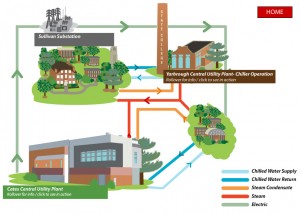
To better explain how our combined heat and power system will work the University Sustainability Office, with technical support from Energy Management and web development from Springleaf Strategies, has launched a web-based interactive tool. Click the picture to the left to launch it, or go here go.ncsu.edu/chp.
Combined heat and power, or cogeneration, is the simultaneous production of electricity and utilization of “waste” heat for the production of steam – how we heat and cool our buildings. Cates Utility Plant (the building behind First Year College, near the outdoor basketball courts) is being outfitted with two 5.5 Megawatt gas combustion turbines and two 50,000 pound per hour heat recovery steam generators. The system will provide roughly 30 percent of electrical power needs of main campus. Additionally, the cogeneration plant will increase the efficiency of steam production by approximately 35% and reduce NC State’s greenhouse gas emissions by 8 percent.
Learn more about the campus utility distribution system by visiting go.ncsu.edu/chp.
- Categories: