Campus As A Classroom
Student Innovation. Campus Collaboration. Sustainable Impact.
Campus As A Classroom provides experiential learning opportunities for students that support the university’s sustainability goals while fostering collaboration between students, faculty and staff. The program is coordinated by the University Sustainability Office and includes three pathways: Internships, Courses and Student-Led Projects.
Internships
The internship program provides on-campus, real-world learning opportunities about sustainability. The paid internships are for the academic year (fall and spring semesters) and pair students with operations-focused projects that improve campus sustainability.
In addition to working on their assigned projects, students are part of a year-long cohort. Through this cohort, interns participate in monthly meetings with fellow interns and complete supplementary workshop modules intended to enhance students’ knowledge and skills in the areas of sustainability principles, project management and professional development.
The internship experience includes the opportunity to:
- Learn From Experts: Each project is proposed and led by a university employee with expertise in the project topic to facilitate student learning and project success.
- Make an Impact: Students work independently on their assigned project with an opportunity to present findings and recommendations to stakeholders.
- Grow Together: A year-long cohort experience allows students to develop professional skills and grow in their understanding of sustainability.
Propose An Internship Project
University employees are encouraged to participate in Campus As A Classroom by submitting proposals for on-campus sustainability projects that could benefit from having a student intern.
Learn More About Internship Project Proposals
University employees who submit proposals should expect to act as the intern supervisor. In doing so, you can facilitate meaningful professional development and educational opportunities for students while taking advantage of an internal support network of faculty and staff across campus.
Submitting a Project
Prior to submitting a project proposal, please review our project guidelines and expectations document to ensure your project aligns with the program. You may submit your project application prior to identifying your funding source, and the Sustainability Office can offer support in applying through the various funding sources above. However, your project will not be eligible to be accepted as part of Campus As A Classroom until funding is finalized.
Project applications for the 2026-2027 academic year will close June 1, 2026.
Supervisor Requirements
- Participate in the student interview and selection process (late June-late-July), which will be facilitated by the University Sustainability Office
- Meet with the intern(s) at least once a week
- Approve students’ timesheets on a weekly basis
- Provide general project oversight and resources when necessary
- Set clear project expectations at the beginning of the academic year
Funding
Campus As A Classroom internships are paid, so submitted project proposals must include a funding source.
Minimum compensation recommendations for interns are $13/hour for undergraduate students and $15/hour for graduate students.
Campus As A Classroom interns ideally work 6 hours per week: 5 hours on project work and 1 hour on cohort-related readings and activities. Based on this schedule, partners should anticipate funding $2,262 for an undergraduate student and $2,610 for a graduate student for one academic year, or 29 weeks, not including university holidays and breaks.
If the project does not have funding, here are alternative funding options:
| Funding Option | Description | Application Instructions | Application Deadline |
|---|---|---|---|
| New! Climate and Sustainability Academy (CaSA) | CaSA will fund up to three Campus As A Classroom internship positions (up to $2,750 per internship). | February 2026. You will be notified on April 21, 2026 if funding is granted. | Submit by May 1, 2026. You will be notified on May 15. |
| Sustainability Fund | Partners must submit a detailed application to NC State’s Sustainability Fund. Those who apply through the Sustainability Fund will NOT need to complete a separate Campus as a Classroom project application. Applying through the Fund allows partners to also request funds to pay for additional resources associated with the project beyond student compensation. | When applying, mark “Yes” next to the Campus as a Classroom option on the “Application Information” section of the application. Specify the desired number of internships under the “Personnel” area of the “Project Budget & Justification” section of the application, but create separate line items if requesting more than one internship. | In the job description, indicate that you are submitting for a year-long position AND that you are interested in having the position be part of the Campus as a Classroom program. |
| Provost’s Professional Experience Program (PEP) | Partners must submit a detailed job description for the work that the student intern(s) would complete. PEP is also limited to undergraduate students, so projects that require a graduate student should not pursue PEP. PEP will fund 75% of the position, while your department must cover the remaining 25%. | In the job description, indicate that you are submitting for a year-long position AND that you are interested in having the position be part of Campus as a Classroom program. | The estimated application due date is May 31, 2026. You will be notified in June if funding is granted. |
| Federal Work Study (FWS) | Partners must apply to be a work study location. Your selection of students will be limited to those who have qualified for FWS. FWS will cover 75% of student compensation, while your department must cover the remaining 25%. | N/A | Applications can be submitted and approved on a rolling basis. |
| Department Funding | This funding avenue requires no application to an external funding source. Internal funding also allows partners to compensate students if their student(s) work more than 6 hours/week. | N/A | N/A |
Apply for an Internship
Applications to join the 2026-2027 Campus As A Classroom student internship program will reopen this summer.
Internship Requirements
- Attend all monthly cohort meetings
- Complete supplementary workshop modules
- Remain communicative and open-minded with all teammates and project advisor(s)
- Maintain accountability for duties and responsibilities
- Attend kick-off retreat in the fall semester
- Dedicate 6 hours per week for intern work and assignments
- Complete timesheets weekly
- Present project findings and results at the end of the academic year
Compensation and Academic Credit
Compensation
Students are paid bi-weekly as hourly employees through the PackPortal System, which requires students to enter their hours directly on a weekly basis. As a paid employee of the university, interns are required to complete an I-9 Form and to be onboarded into the NCSU payroll system. Interns will be required to provide 1) a current resume with appropriate address, 2) a passport or picture ID and Social Security Card, and 3) a NCSU ID number.
Academic Credit
Some degree programs require an external learning experience. Students selected for participation in the Campus As A Classroom internship program are encouraged to initiate opportunities for relevant academic course credit through their college or school.
Timeline
Internships are for one academic year, starting in the fall semester. Interns will not be required to work over any university breaks. Note that you will be asked to upload a resume as part of the application form. If you are selected for an interview, you will be contacted by email.
Student applications are accepted each summer.
Meet the 2025-2026 Campus As A Classroom Student Interns

NC State Environmental Resource Clinic Student Training Program

Campus Circularity

Energy Management Communications

NC State Environmental Resource Clinic Student Training Program

NC State Environmental Resource Clinic Student Training Program

Sustainable Food Systems and Interdisciplinary Training (SFS-IT) Scholar

Sustainability Communications and Outreach

Sustainable Labs

Utilities and Engineering Support

Business Sustainability Collaborative
Pollinator-Friendly Campus
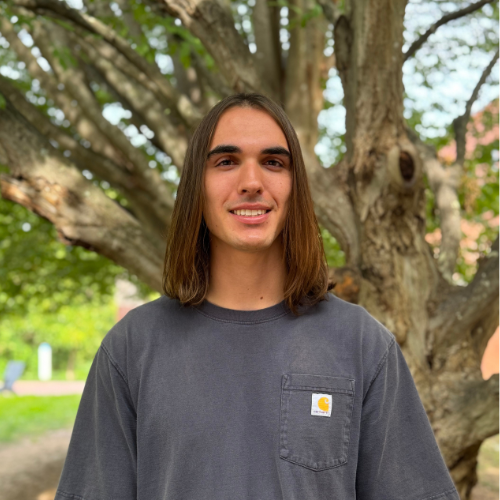
Field Botany Research

Sustainable Wolfpack

Campus Circularity

Campus Circularity

Sustainability Data and Reporting

NC State Environmental Resource Clinic Student Training Program

NC State Environmental Resource Clinic Student Training Program

Sustainable Food Systems and Interdisciplinary Training (SFS-IT) Scholar

Sustainable Dining Marketing

Sustainable Food Systems and Interdisciplinary Training (SFS-IT) Scholar

Sustainability Living Labs

Landscape Architecture

Agroecology Education Farm
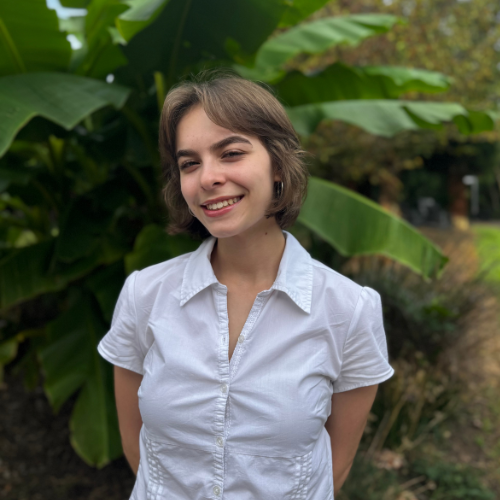
Bee Campus

GIS Support

NC State Environmental Resource Clinic Student Training Program

Campus Circularity

Sustainable Food Systems and Interdisciplinary Training (SFS-IT) Scholar

Dining Food Waste Reduction

Zero Waste Graphic Design and Marketing

NC State Environmental Resource Clinic Student Training Program

Sustainable Food Systems and Interdisciplinary Training (SFS-IT) Scholar
Courses
In addition to internships, on-campus student sustainability projects can begin in the classroom through a variety of courses. Most frequently, such projects are completed by students in capstone and senior design courses and are led by an NC State faculty or staff member. While the Sustainability Office does not oversee every project, it works to archive this interdisciplinary work at both the undergraduate and graduate levels.
If you have a sustainability project idea, you can submit a proposal to the appropriate department. If you are a faculty member interested in adding a sustainability project to your course, reach out to the University Sustainability Office.
Student-Led Projects
Students with ideas for sustainability-related research or other projects on campus are encouraged to contact the University Sustainability Office. Depending on the project’s focus and scope, funding opportunities may be available through campus initiatives such as the NC State Sustainability Fund or an Office of Undergraduate Research Award.
Project Database
Browse the list of current and past projects that are part of the Campus As A Classroom initiative since it launched in Fall 2021. The database includes both internship projects, as well as student involvement as part of university coursework.